

Halloween activities for preschoolers don’t have to be just candy and costumes. With a few small tweaks, pumpkin carving becomes a science lesson, sorting candy corn becomes math practice, and building a spider web becomes an engineering challenge. The activities below use things you probably already have at home and quietly build real STEAM skills (science, technology, engineering, arts, and math) while your child thinks it’s just Halloween fun.
Why Seasonal Themes Make Learning Stick
Preschoolers learn best when a concept connects to something they’re already excited about. A pumpkin that sinks or floats teaches the same science as any other sink-or-float experiment, but the pumpkin makes it memorable. Leaning into the season is an easy way to keep hands-on learning going all year, not just during the school day.
10 Halloween STEAM Activities to Try
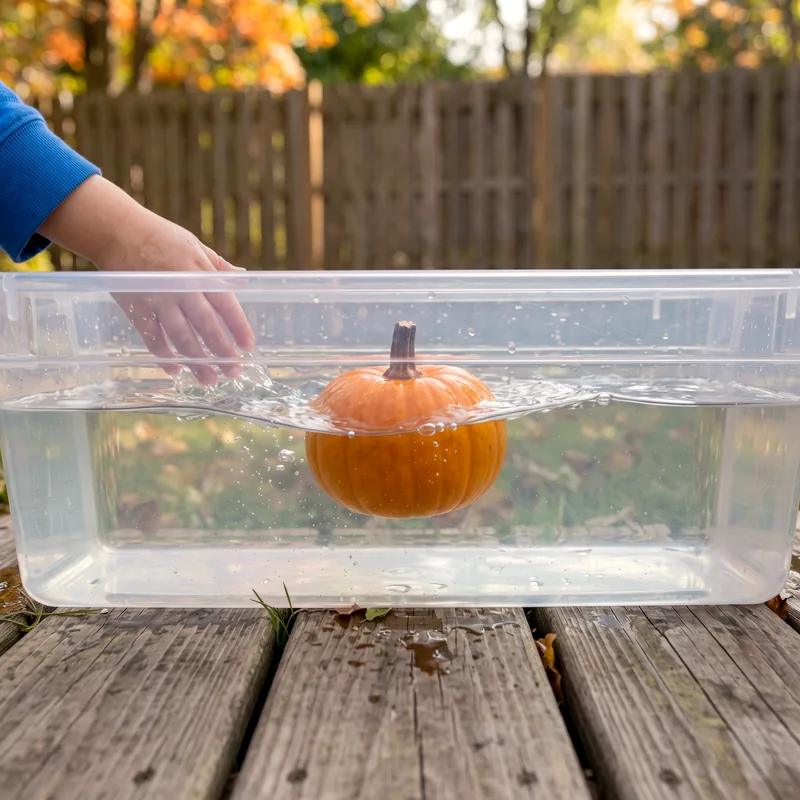
1. Pumpkin Sink or Float
Fill a bin with water and gather a few mini pumpkins, gourds, or apples. Ask your child to guess which ones will sink and which will float before testing each one. It’s a simple, hands-on introduction to density.
2. Baking Soda Pumpkin Eruption
Hollow out a small pumpkin, add baking soda, then pour in vinegar mixed with orange food coloring. The fizzy eruption is classic kitchen chemistry with a Halloween twist.
3. Flashlight Shadow Ghost Puppets
Cut simple ghost or bat shapes out of black paper, tape them to a craft stick, and darken the room. Let your child experiment with moving the puppet closer to and farther from a flashlight to see the shadow grow and shrink.
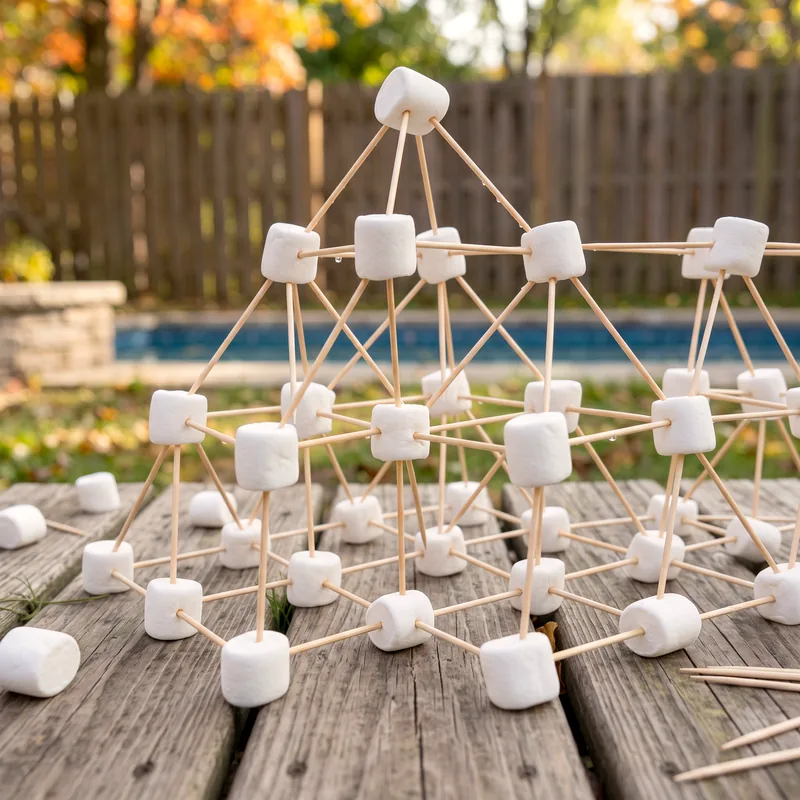
4. Marshmallow and Toothpick Spider Web
Using mini marshmallows and toothpicks, challenge your child to build a web or a simple structure. It’s an early engineering exercise in stability and structure, and a snack at the end.
5. Pumpkin Ramp Races
Prop up a board or baking sheet as a ramp and race small pumpkins or gourds down it. Ask which one rolled fastest or farthest, and why. It’s a playful way to explore motion.
6. Spider Web Symmetry Painting
Fold a paper plate or paper in half, drop paint near the fold, and press it closed. Unfolding reveals a symmetrical splatter your child can turn into a spider web with a marker. A fun, hands-on look at symmetry.
7. Ghost Bubble Painting
Mix white paint into a bubble solution, add a straw, and blow bubbles onto dark paper to create ghostly circles. Add stick-on eyes once dry for instant ghosts.
8. Candy Corn Sorting and Counting
Dump out a pile of candy corn (or any small counters) and ask your child to sort by color, then count each group. It’s an easy, low-prep way to practice counting and classification.
9. Mummy Measuring with Toilet Paper
Wrap a willing family member (or a stuffed animal) in toilet paper like a mummy, then count how many squares it took. It’s a silly, memorable way to introduce measurement.
10. Pumpkin Seed Counting and Estimating
Scoop the seeds out of a real pumpkin and ask your child to guess how many there are before counting them together in groups of 10. It combines estimation with real counting practice.
Which Skill Each Activity Builds
| Activity | STEAM Skill |
|---|---|
| Pumpkin Sink or Float | Science: density and prediction |
| Baking Soda Pumpkin Eruption | Science: chemical reactions |
| Flashlight Shadow Puppets | Technology: light and shadow |
| Marshmallow Spider Web | Engineering: structure and stability |
| Pumpkin Ramp Races | Engineering: motion |
| Spider Web Symmetry Painting | Arts / Math: symmetry |
| Ghost Bubble Painting | Arts: creative expression |
| Candy Corn Sorting and Counting | Math: classification and counting |
| Mummy Measuring | Math: measurement |
| Pumpkin Seed Counting | Math: estimation and counting |
How AEA Brings STEAM Into Every Season
Seasonal themes like Halloween are a natural fit for our STEAM curriculum. Rather than pausing hands-on learning for a holiday, our classrooms lean into it, turning pumpkins, candy, and costumes into real science, math, and engineering activities all October long. It’s the same approach we use year-round, just with a seasonal twist.
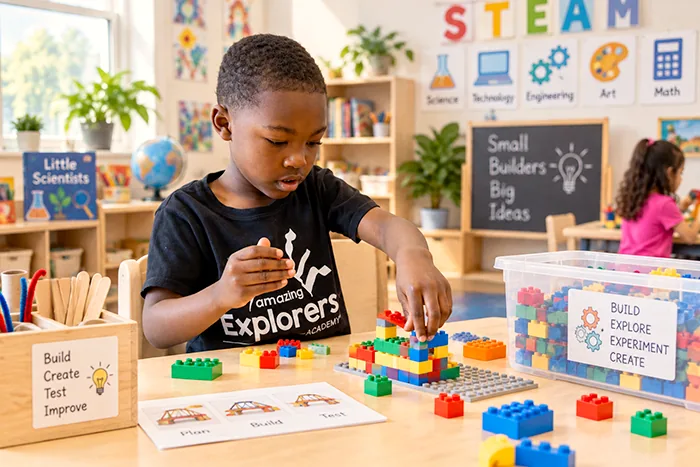
Tour a classroom and see how hands-on STEAM learning shows up all year, seasons included.
Frequently Asked Questions
Why is Halloween good for a preschooler’s development?
Seasonal excitement makes learning stick. Activities tied to something a child is already curious about, like Halloween, tend to hold attention longer than the same lesson without a theme.
What are some easy Halloween activities for preschoolers?
Sorting candy by color, a pumpkin sink-or-float test, and simple bubble painting are all low-prep options that use things most households already have.
How do I make Halloween educational instead of just candy and costumes?
Look for small tweaks to typical Halloween activities: turn seed counting into a math lesson, or a pumpkin carving into a science conversation about what’s inside.
Are these activities messy?
A few are (the pumpkin eruption and bubble painting especially), so plan for those outside or with a covered table. Others, like sorting and counting, are completely mess-free.
See Hands-On STEAM Learning in Action
Tour any AEA location and meet the team.