

There’s no single right age to put an infant in daycare. Many families start when parental leave ends, and many programs, including AEA, welcome babies from 6 weeks old. What matters more than the exact date is finding a program you trust: one that follows safe sleep guidelines, keeps caregiver ratios low, and runs the day around your baby’s own cues. Then ease in with a plan for the first few weeks.
Below is how to think about when to start, the questions worth asking on every tour, and what the first weeks usually look like.
In this article
- When to start infant daycare
- What to ask on a tour
- How to get ready before the first day
- What the first weeks look like
- How AEA answers these questions
- FAQ
When to Start Infant Daycare
Most parents don’t get to pick the “perfect” week. The start date usually comes down to when parental leave ends, a work schedule, or what other care is available. A few things can help you decide:
- Start the search early. Infant classrooms are small, and many programs keep waitlists, so looking a few months ahead gives you more options.
- Build in a gentle start if you can. If your program allows it, a few shorter days before the first full week can make the transition easier for both of you.
- Loop in your pediatrician. If your baby was born early or has any health needs, ask your doctor what to consider before starting group care.
Whatever your timeline, the most important decision isn’t the date. It’s the program.
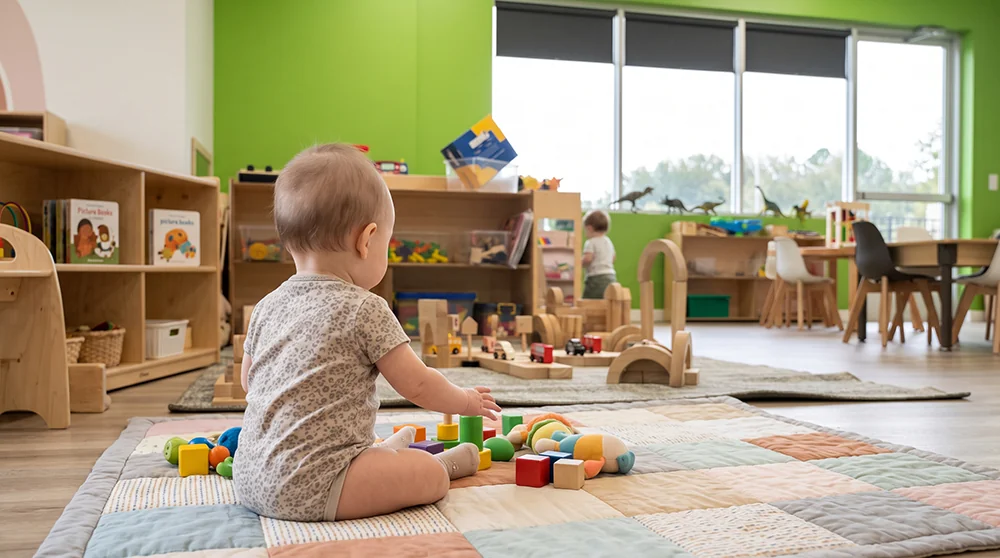
What to Ask on a Tour
Pediatric and child care experts agree on what separates a strong infant program from an average one. The American Academy of Pediatrics suggests checking licensing, written policies, and ratios, and Child Care Aware of America offers a detailed center checklist. Here are the questions that matter most for babies:
| Ask About | What a Strong Answer Sounds Like |
|---|---|
| Safe sleep | Babies are placed on their backs for every sleep, on a firm, flat surface, in a crib with a fitted sheet and no bumpers, blankets, or toys. Every staff member is trained, and staff can see and hear sleeping babies at all times. |
| Ratios and group size | A clear number for how many babies each caregiver looks after, and whether the school meets the state minimum or does better. |
| Caregivers | Specific infant training and experience, background checks, and teachers who have stayed long enough for your baby to form a bond with them. |
| Daily routine | Feeding and sleep follow your baby’s cues, not a rigid clock, with plenty of supervised floor time rather than long stretches in swings or bouncers. |
| Feeding | A clear process for labeling, storing, and warming bottles, whether you use breast milk or formula, and for following your pediatrician’s guidance on solids. |
| Illness and health policies | A written policy on when sick children stay home, when they can return, and how medication is handled. |
| Security | Secured entry, a defined list of authorized pickups, and a clear check-in and check-out process. |
| Communication | A daily summary of feedings, diapers, naps, and milestones, and an easy way to reach your baby’s teacher. |
On safe sleep especially, it helps to know the baseline. The AAP recommends that babies sleep on their backs, on a firm, flat surface, with nothing else in the sleep space, and that this applies to every caregiver until a baby reaches 1 year old. If a program can’t describe its safe sleep practices clearly, that’s worth noticing.
How to Get Ready Before the First Day
- Finish the enrollment paperwork early. Schools need forms such as emergency contacts, a current immunization record, and a recent physical before your baby’s first day. At AEA, ointments like diaper cream also need a signed authorization form.
- Visit with your baby first. Even a short visit lets your baby see the room and lets you meet the caregivers.
- Share your baby’s routines. Tell the teachers how your baby likes to be held, soothed, fed, and put down for naps. The more they know, the smoother the first days.
- Practice any new routines at home. If your baby will take a bottle at daycare, try it a few times beforehand with another caregiver.
- Label everything. Bottles, pacifiers, clothes, and blankets all go home and come back, so names and dates help.
- Pack a spare outfit or two. Spit-up and diaper changes happen.
- Plan for your own feelings. Saying goodbye is often harder on the parent than the baby. A short, calm goodbye usually works better than a long one.
What the First Weeks Look Like
Every baby adjusts differently, but a few things are common:
- Some fussiness. New faces, new sounds, and a new routine are a lot for a baby. A few rough days are normal.
- Changes in sleep and feeding. Your baby may nap differently at daycare than at home, or feed more in the evenings once you’re back together.
- More colds. Many families notice their baby catches more colds in the first months of group care. A clear illness policy and good handwashing habits help, and your pediatrician can tell you what to watch for.
- A learning curve for you, too. Mornings get easier once you find your rhythm.
Check in with your baby’s teacher often during the first weeks and share what you’re seeing at home. At AEA, teachers write a daily report on every child, and parents are welcome to visit any time during opening hours, which can be reassuring while everyone settles in. If you’re ever concerned about your baby’s sleep, feeding, or health, call your pediatrician.
This guide is general information, not medical advice. For questions about your baby’s health, sleep, or feeding, talk with your pediatrician.
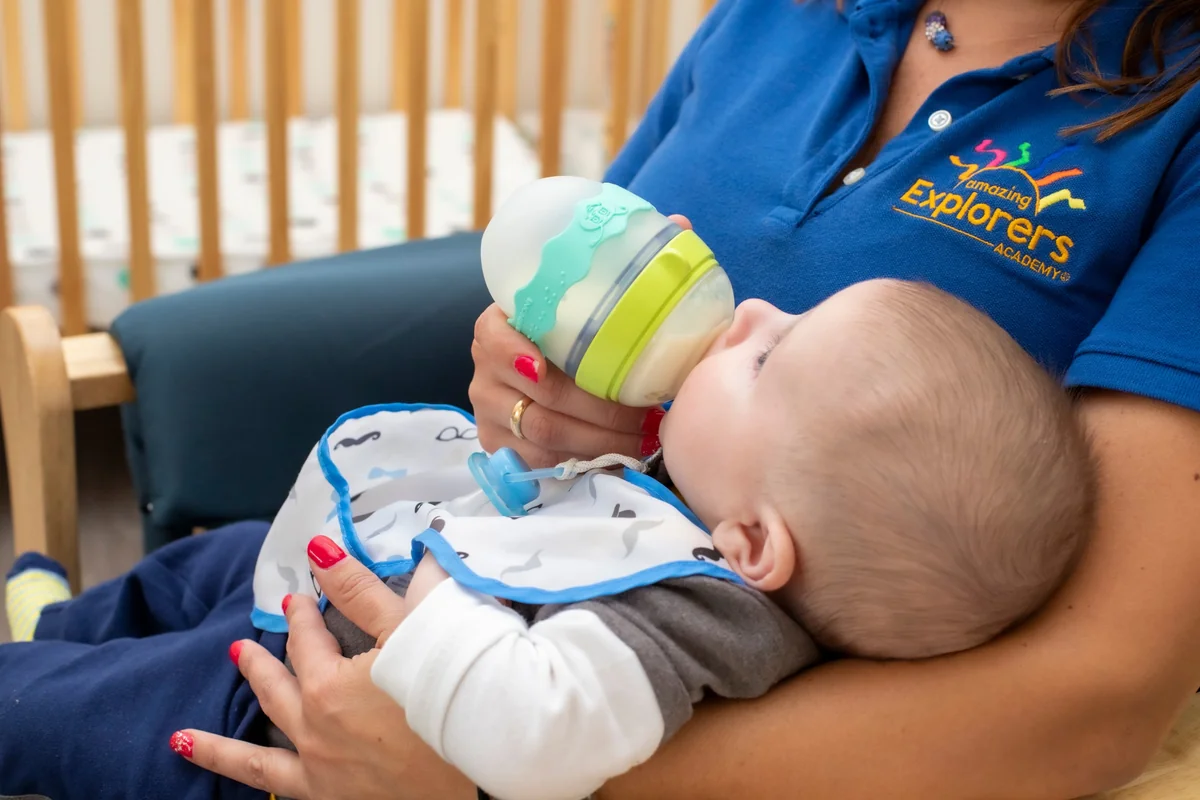
How AEA Answers These Questions
Amazing Explorers Academy welcomes babies from 6 weeks old, so your child can start in the infant room and stay with the same school through the early years and beyond. Here’s how our schools handle the questions above. Details can vary by state and location, so your school director can confirm exactly how it works where you live.
- Safe sleep: Infants are always placed on their backs to sleep, in their own crib. Babies sleep on demand, following their own schedule, and any alternate sleep position or wedge requires a physician’s authorization.
- Supervision: Teachers maintain proper ratios and keep every child in sight and sound.
- Security: The entrance is keypad controlled, and families sign children in and out with a fingerprint scanner or touch screen. Children are released only to adults on your authorized pickup list, who must show ID, and visitors are signed in, badged, and accompanied by a staff member.
- Cameras and drills: Cameras cover the classrooms and other indoor and outdoor areas, and the school runs fire, intruder, and emergency drills every month.
- Cleanliness and health: Surfaces are disinfected daily, furniture and toys are washed and disinfected each day, and infant and toddler toys are sanitized because they get mouthed. There’s a deeper cleaning once a week. Children sent home sick can return once they’ve been symptom free for 24 hours.
- Feeding: Infants are fed on demand, following your baby’s cues. Special feeding needs are handled with a physician’s documentation.
- Daily communication: Teachers write an electronic daily report on every child covering activities, meals, naps, and diaper changes. Parents are welcome to visit any time during opening hours, and formal parent-teacher conferences happen at least twice a year.
- Licensing: Our schools meet or exceed applicable state licensing requirements and are subject to inspection by state and local officials.
In the classroom, our approach is hands-on and curiosity-driven from the very start, with infant teachers following each baby’s interests at their own pace. The best way to see all of this is to visit, meet the infant teachers, and ask every question on the list above.
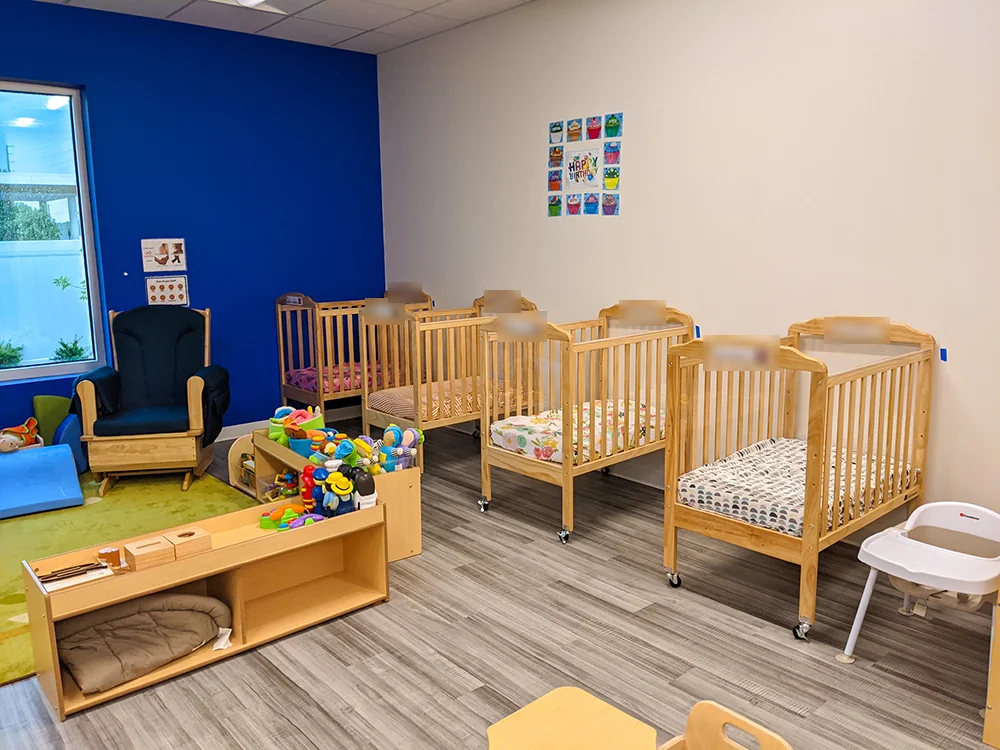
Tour a classroom, meet the team, and bring your list of questions.
Frequently Asked Questions
What’s the youngest age for daycare?
It varies by program. Many centers accept babies starting around 6 weeks old, including AEA. Your own start date will likely depend on parental leave and what’s right for your family.
How do I know a daycare is safe for my infant?
Start with licensing, then ask about safe sleep practices, caregiver ratios, security, and written health policies. The AAP and Child Care Aware of America both publish checklists you can bring on a tour.
What should I pack for my baby’s first day?
At AEA, infants bring diapers, wipes, ointments, premixed formula or breast milk, jar food and infant cereal when applicable, two to three changes of clothing, a fitted crib sheet, and a sleep sack. Label everything with your baby’s first and last name, and ask your school director for the exact list at your location.
Is it normal for my baby to get sick more often at daycare?
Many families notice more colds in the first months of group care. Ask the school about its illness policy, and talk with your pediatrician if you have concerns about your baby’s health.
How long does it take a baby to adjust to daycare?
Every baby is different. Some settle in within days, while others take a few weeks. Sharing your baby’s routines with the teachers and keeping goodbyes short and calm can help.
Meet the Team Caring for Your Baby
Tour any AEA location and see an infant classroom in person.