When most parents hear the term STEAM curriculum, they immediately think of five separate subjects.
While those are the “ingredients,” the true definition goes far beyond the acronym.
At its heart, a STEAM-based approach is about how a child learns, not just what they learn.
What is a STEAM Curriculum? (Beyond the Acronym)
STEAM is an acronym that stands for Science, Technology, Engineering, Arts, and Mathematics. It is the foundation of the curriculum at The Amazing Explorers Academy’s preschool, daycare, and pre-kindergarten programs.
Instead of teaching these subjects in silos, a modern STEAM curriculum connects them through real-world discovery.
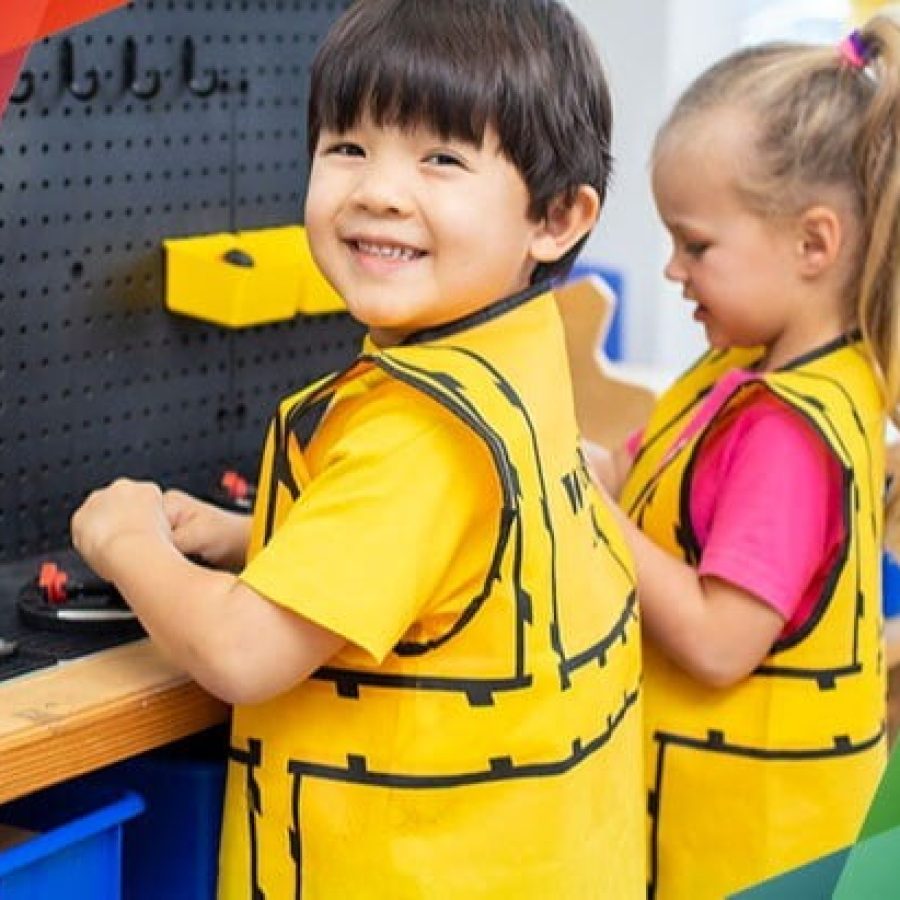
It moves away from the old-fashioned “sit and listen” model and replaces it with a hands-on, minds-on philosophy.
In practical terms, it’s the difference between looking at a picture of a bridge in a book and actually building one out of recycled materials to see how much weight it can hold.
Key Concepts Behind the STEAM-based Curriculum
Preparing for the Future
Today’s preschool-aged children are facing a future that is vastly different than the ones inhabited by their parents.
Technology is advancing so quickly that most of today’s traditional learning techniques could be obsolete or ineffective by the time they reach high school, if not much earlier.
Introducing STEAM-based concepts at a very early age gives even the youngest students the educational foundation they will need to succeed throughout their academic careers and even into their professional ones.
If parents wait until they are older to expose their kids to important, critical tech-centric educational concepts and ideas, it may be too late.
Age-Appropriate Learning
Of course, things like advanced engineering and how technology works and other topics are beyond the intellectual capabilities of the average pre-kindergarten student.
But The Amazing Explorers Academy introduces these ideas in an age-appropriate manner that is fun, interactive, and engaging to even the youngest child.
So why do toddlers and preschool-aged children need a STEAM-based curriculum, even if most of them don’t even know how to read and write yet?
Won’t that kind of technical information go right over their heads?
The Science of Curiosity: How STEAM Shapes the Preschool Brain
To answer “why do preschoolers need a STEAM curriculum?”, we have to consider how their incredible brains are wired.
Active vs. Passive Learning: Building “Sticky” Memories
During the first five years of life, a child’s brain is a masterpiece of neuroplasticity—it is literally building the “hardware” it will use for the rest of their lives.
Think of a preschooler’s brain like a garden. Passive learning, such as watching a video or memorizing ABCs, is like tossing seeds on top of dry soil; some might grow, but many wash away.
Active learning through STEAM is like digging into the earth, planting the seeds, and watering them daily.
When a child uses their hands to mix colors or their logic to balance a tower of blocks, they aren’t just playing; they are firing off thousands of neural “sparks.”
These sparks create “sticky” learning: because the child is physically and emotionally engaged in the discovery, the information sticks to the brain’s architecture.
This active engagement is exactly why STEAM for preschoolers is so vital. It transitions them from being passive observers of the world to being active investigators of it.
5 Lifelong Benefits of a STEAM-Based Preschool Education
When we ask about the purpose of a STEAM curriculum, we are looking for more than their success in next year’s kindergarten class. We are looking at the adults they will become.
Integrating Science, Technology, Engineering, Arts, and Math into their earliest experiences means we’re building a foundation that lasts a lifetime.
1. Developing “Solution-Oriented” Critical Thinking
In a STEAM curriculum, children aren’t simply finding the “right” answer: they are learning how to ask the right questions.
Whether they are figuring out why a toy boat sinks or how to balance a lopsided tower, they are practicing high-level problem-solving.
This ability to analyze a situation and find a creative solution is a skill that will serve them in every boardroom and classroom they ever enter.
2. Building Emotional Resilience through “Productive Failure”
In the world of STEAM, an experiment that doesn’t work isn’t a “fail”, but it’s used as a data point.
When a preschooler’s bridge collapses, a STEAM-based teacher encourages them to ask, “What can we try differently?”, and this process builds incredible resilience.
Children learn that setbacks are just part of the process, helping them develop a growth mindset.
3. Fostering Collaborative Communication
Rarely is a STEAM project a solo mission.
Whether they are painting a giant mural or working together to build a ramp, children must negotiate, share ideas, and listen to their peers.
These early social interactions are the social laboratory where they learn to communicate effectively—a vital skill for making friends today and leading teams tomorrow!
4. Encouraging “Out-of-the-Box” Creative Innovation
The “A” in STEAM (Arts) is the secret sauce that turns a scientist into an innovator.
By encouraging children to express their ideas through multiple mediums (clay, paint, music, or movement), we ensure their logical brain stays connected to their creative heart.
This prevents their thinking from becoming rigid and keeps them open to new, innovative possibilities.
5. Nurturing a Natural Tech-Fluency
This is incontestable: we live in a modern world in which technology is the “pencil” of the 21st century.
A STEAM-based preschool education introduces technology not as a passive screen to watch, but as a tool to create with.
We aim to teach children the “why” behind the tools they use, so our Little Explorers grow up to be masters of technology rather than just consumers.
AEA’s Purpose and Commitment to a STEAM Curriculum
Our educational framework was developed with the help of university learning professionals and is tailored specifically for young minds.
The STEAM-based concepts aren’t meant to replace primary learning like the ABCs, colors, and basic numbers, but to complement them in a manner that can instantly be absorbed and appreciated by the youngest of children.
When graduates of The Amazing Explorers Academy reach elementary school, they can have a distinct advantage over other children thanks to the advanced learning techniques they have experienced during their prekindergarten education. And that can set them on a course for success for life.
Schedule a tour at your nearest Amazing Explorers Academy today! Book Your Visit Here