

Parenting comes with constant learning, and understanding different styles can help make sense of why children act the way they do.
If you start wondering whether your home might fit an “uninvolved” pattern, it’s normal to feel a mix of concern, curiosity, and hope for something better!
What is the uninvolved parenting style?
At its core, the uninvolved parenting style shows low responsiveness and low demandingness. Parents may be emotionally distant, give little support or guidance, and take a hands-off approach to both affection and discipline.
In daily life, this often appears as minimal conversation, inconsistent routines, and a feeling that the child has to figure things out on their own. It isn’t always intentional, but the child still feels the distance.
Sometimes this style develops gradually. A parent may think they are giving the child independence, not realizing how much emotional support children need to feel secure.
Without structure and connection, children may see the distance as disinterest, even when that isn’t what the parent intends.
What Causes Uninvolved Parenting?
Uninvolved parenting rarely comes from a lack of love! More often, it develops quietly, shaped by circumstances that make emotional presence harder, like financial pressure or mental health struggles.
Some parents grew up without warm and engaged role models, so they repeat patterns they never had a chance to question.
Others get overwhelmed by daily demands and slowly pull back, without realizing how much the distance affects their child.
Understanding these roots helps shift the focus away from blame and toward the real-life challenges many families face.
Impacts on Child Development
Research gives us a clear picture of how this pattern shapes development. Children who grow up with uninvolved parenting often struggle with self-esteem and have a harder time building healthy friendships.
Without steady guidance, school performance can suffer, and challenges may continue into adolescence. Children can show higher rates of impulsivity, depression, or even experiment with substances.
Many also develop insecure attachment patterns. They may have trouble trusting others or feel uncomfortable relying on people. Behaviorally, children might show aggression or act out at different stages of childhood.
Over time, these emotional, social, and academic difficulties can overlap, creating a broader sense of instability in a child’s life.
How Children Typically Respond Day-to-Day
Everyday signs of uninvolved parenting can be subtle. A child might seem unusually withdrawn, very independent, or quick to seek comfort from peers instead of home.
Some children act out by pushing limits, seeking attention through disruption, or struggling with routines. Others become anxious, cautious, or unsure how to ask for help.
But these behaviors do not mean that the child is “bad”: they are signals, ways the child shows their struggle with emotional distance and tries to navigate the world with the tools they have.
Paying attention to these signals helps parents respond with support rather than judgment. Recognizing them is the next step. Seeing clearly allows parents to make thoughtful changes and strengthen their connection with their child.
Why Recognizing It Matters
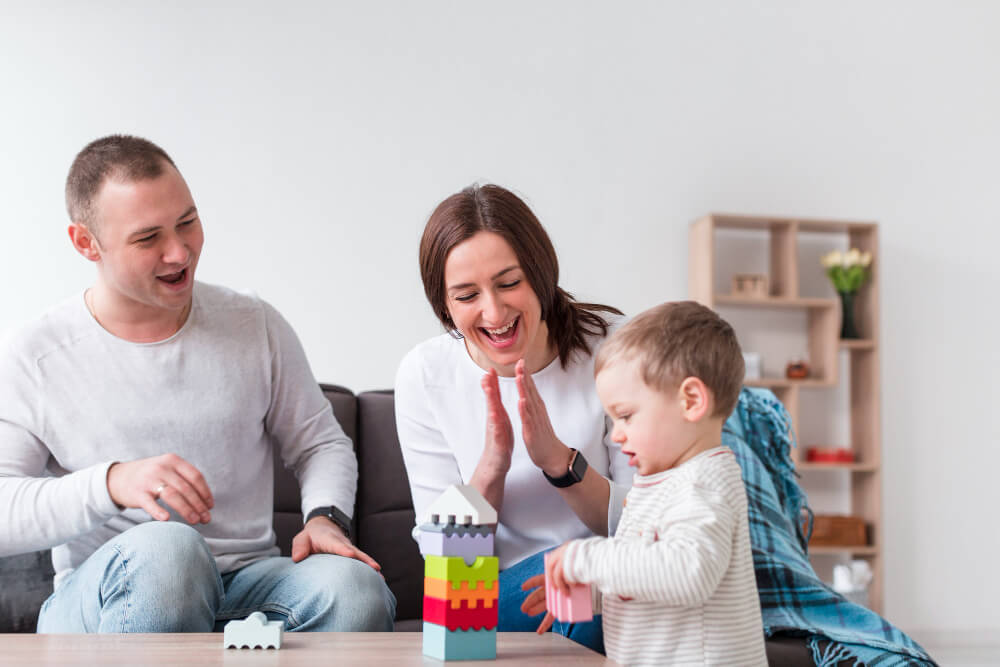
Seeing these patterns doesn’t mean blaming anyone. It helps a parent understand the effects of distance and opens the door to a more engaged, nurturing relationship.
Even a small moment of recognition can be the first step toward meaningful change.
Understanding uninvolved parenting also helps separate behavior from identity. Instead of thinking “I’m not good at this,” parents can see it as a pattern that can be adjusted with support, practice, and intention.
This shift—from self-criticism to understanding—creates space for healthier interactions and a stronger, more secure parent-child bond.
Common Misconceptions About Uninvolved Parenting
One common misconception about uninvolved parenting is that giving children space automatically builds independence.
While autonomy matters, children still need steady emotional cues to grow confidently—such as warmth, guidance, and attention to their world.
Another misconception is that only neglectful parents fall into this style. In reality, it often develops gradually and unintentionally.
Parents may think they are being neutral or staying out of the way, not realizing that children interpret this absence as a lack of connection.
Clearing up these misunderstandings helps families see the difference between healthy independence and emotional unavailability.
How to Move Toward Engaged Parenting
The encouraging part is that change doesn’t require big steps.
It can start with something simple, like a quiet bedtime chat, a quick check-in after school, or a few minutes helping with a daily task.
Even on the busiest days, being present by making eye contact, asking how things are going, and listening without rushing starts to rebuild connection. This shift toward a more engaged approach may help provide both warmth and guidance.
Small, steady habits add up. Over time, they create a home where children feel seen, supported, and guided.
When to Seek Support and What It Looks Like
Support can make the shift toward engagement feel less overwhelming.
For some families, this might start with a conversation with a pediatrician, a school counselor, or a trusted community worker who can point to helpful resources.
Parenting groups, online or in person, offer guidance and reassurance that others face the same struggles.
If emotional or mental health challenges are involved, a therapist can help parents build new patterns without judgment or pressure.
Seeking support is not a sign of failure. It is a step toward creating a steadier, more connected environment for both parent and child!
Building a stronger connection
Uninvolved parenting can bring many challenges, but understanding it is the first step towards growth.
A warm, responsive relationship helps build a real connection with your child. Every small step you take to be present, listen, and engage matters and helps strengthen that bond.
The secret to better connections lies in self-awareness. Learn what parenting styles are and how mastering your own approach can create a calm, thriving environment for your child. Read the full guide now!