
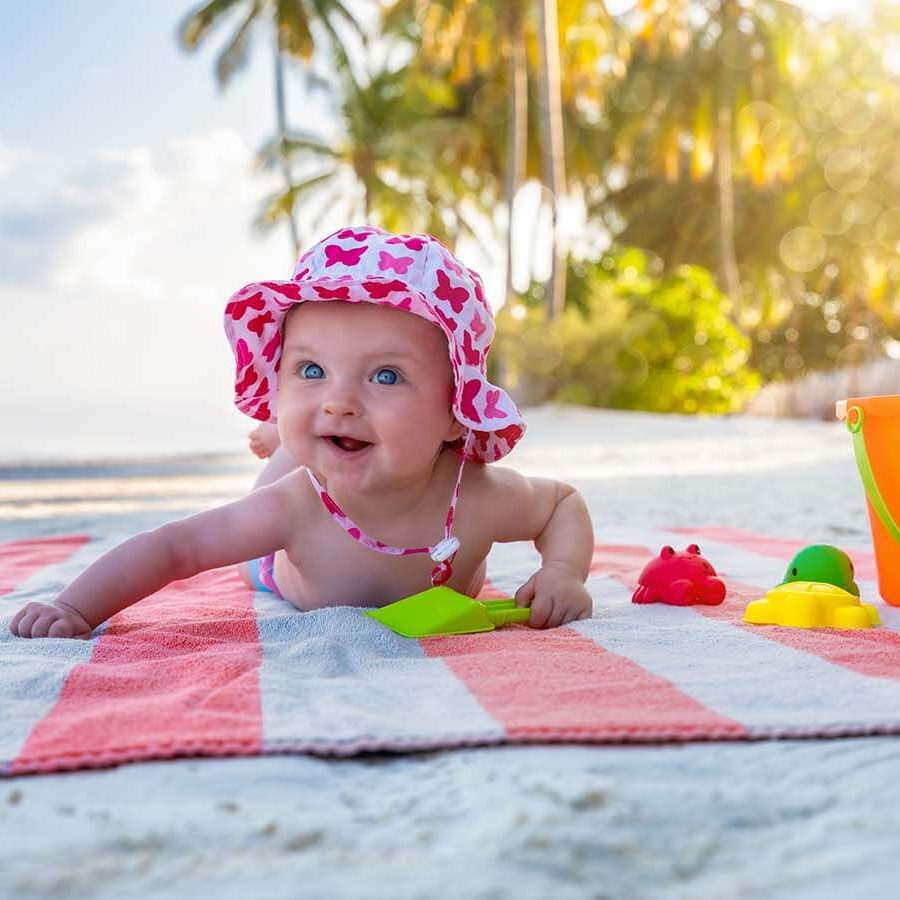
Taking your newborn to the beach is a lovely way to enjoy the outdoors and make special memories. Many new parents look forward to those first adventures and just want to be sure their baby is ready for the experience, so knowing what to consider makes all the difference.
With a bit of planning, even the youngest family members can enjoy time by the sea. From choosing the right age to bringing the right gear, a beach trip can be both safe and relaxing.
Learn how to make it smooth and happy for everyone!
Newborn Beach Timeline, At a Glance
| Age | What’s Generally OK | What to Wait For |
|---|---|---|
| 0 to 2 months | Short, shaded visits; fresh air and ocean sounds | Longer outings, direct sun, water play |
| 2 to 3 months | Longer beach days with full sun protection | Sunscreen (unless a pediatrician advises otherwise), ocean water |
| 6 months and up | Dipping in the water, mineral sunscreen on exposed skin | — |
General guidance, not a substitute for advice from your baby’s pediatrician, especially for premature or medically fragile infants.
Is It Safe To Take a Newborn To The Beach?
It is possible to bring a newborn to the beach, especially for short visits that let them enjoy the fresh air and calming ocean sounds. These brief moments with the family can be soothing and enjoyable when spent in the shade and away from crowds.
That said, many experts recommend waiting until your baby is a bit older, around 2 to 3 months, before planning longer beach days. This gives your baby more time to adjust to temperature changes and makes it easier to manage sun protection and comfort.
When Can a Newborn Go In The Water?
While it may be tempting to dip your baby’s toes in the ocean, it’s best to wait until around 6 months after birth before letting your newborn go in the water. By that age, most babies have better head control and are more capable of handling changes in temperature.
Cold water can be a shock to a young baby’s system, making it harder for them to stay warm and comfortable. Waiting a bit longer helps ensure the experience is both fun and safe, with fewer concerns about chills or overstimulation.
Sun Protection & Temperature Safety
Sun protection should come first when considering going to the beach with a newborn. The American Academy of Pediatrics (AAP) recommends keeping infants under 6 months out of direct sunlight entirely, relying on shade and clothing rather than sunscreen in most cases.
Stick to full-coverage clothing, wide-brimmed hats, and shaded areas like tents or umbrellas. For babies under 6 months, it’s best to avoid sunscreen unless advised otherwise by the pediatrician, and even then, the AAP suggests only a minimal amount on small exposed areas like the face and hands when shade and clothing aren’t enough.
Plan beach time for early morning or late afternoon, when the sun is less intense. Watch for signs of overheating or dehydration, such as flushed cheeks or fewer wet diapers.
Babies under 6 months should only be hydrated with breast milk or formula, not plain water, even in warm weather. Keep feeding on a more frequent schedule while you’re out, since babies can get dehydrated quickly in the heat.
A little preparation goes a long way in keeping your baby safe and content!
Essential Prep & Packing List for the Beach Visit
When thinking about when a newborn can go to the beach, being well-prepared makes all the difference.
Here’s a quick checklist to make a newborn’s visit much safer and enjoyable:
- Choose early morning or late afternoon hours: avoid peak sun (10 a.m. to 4 p.m.) to reduce the risk of overheating and sunburn.
- Set up a shaded area: a large beach umbrella, pop-up tent, or baby beach cabana offers protection from direct sunlight.
- Dress your baby in lightweight, long-sleeve clothing: breathable cotton fabrics, a wide-brimmed hat, and baby sunglasses help shield delicate skin and eyes.
- Use baby-safe mineral sunscreen (for babies 6 months and older): before 6 months, rely on shade and protective clothing. After that, opt for safe skincare products, fragrance-free, zinc oxide or titanium dioxide formulas.
- Pack a soft blanket or play mat: so your baby can lay or stretch comfortably in a clean space off the sand.
- Use a battery-operated fan or cooling towel: helps regulate body temperature in warm beach environments.
Frequently Asked Questions
Can I use sunscreen on a newborn at the beach?
Generally no, not before 6 months. The AAP recommends relying on shade and clothing instead. If shade and clothing genuinely aren’t enough, a minimal amount of sunscreen on small exposed areas is sometimes advised, but check with your pediatrician first.
How do I know if my baby is overheating at the beach?
Watch for flushed or red cheeks, fewer wet diapers than usual, fussiness, or skin that feels hot to the touch. If you notice these signs, move to shade immediately and offer a feeding.
What’s the earliest age I can take my newborn to the beach?
There’s no strict minimum, but most pediatricians suggest waiting until after your baby’s first pediatric checkup and keeping early visits short, shaded, and away from direct sun or water.
Is it okay to let ocean water touch my newborn’s skin?
Brief, gentle contact is generally fine for most babies, but most experts recommend waiting until around 6 months before actual water play, since younger babies can’t yet regulate body temperature well in cold water.
Last Reminders on Preparing Your Beach Visit With a Newborn
Don’t forget to pack breastfeeding or feeding supplies, plenty of diapers, including swim diapers, and enough water and snacks for yourself.
Having these basics ready helps ensure a smooth, stress-free outing for both you and your Little One.
With the right planning, beach trips can be a wonderful way to enjoy fresh air and family moments safely.
For more ideas on bonding and play, check out our article on how to play with a newborn!